

 admin
admin Eye twitching explained: discover why your eyelid starts twitching randomly, what causes it, when to worry, and how to stop eye twitching quickly.
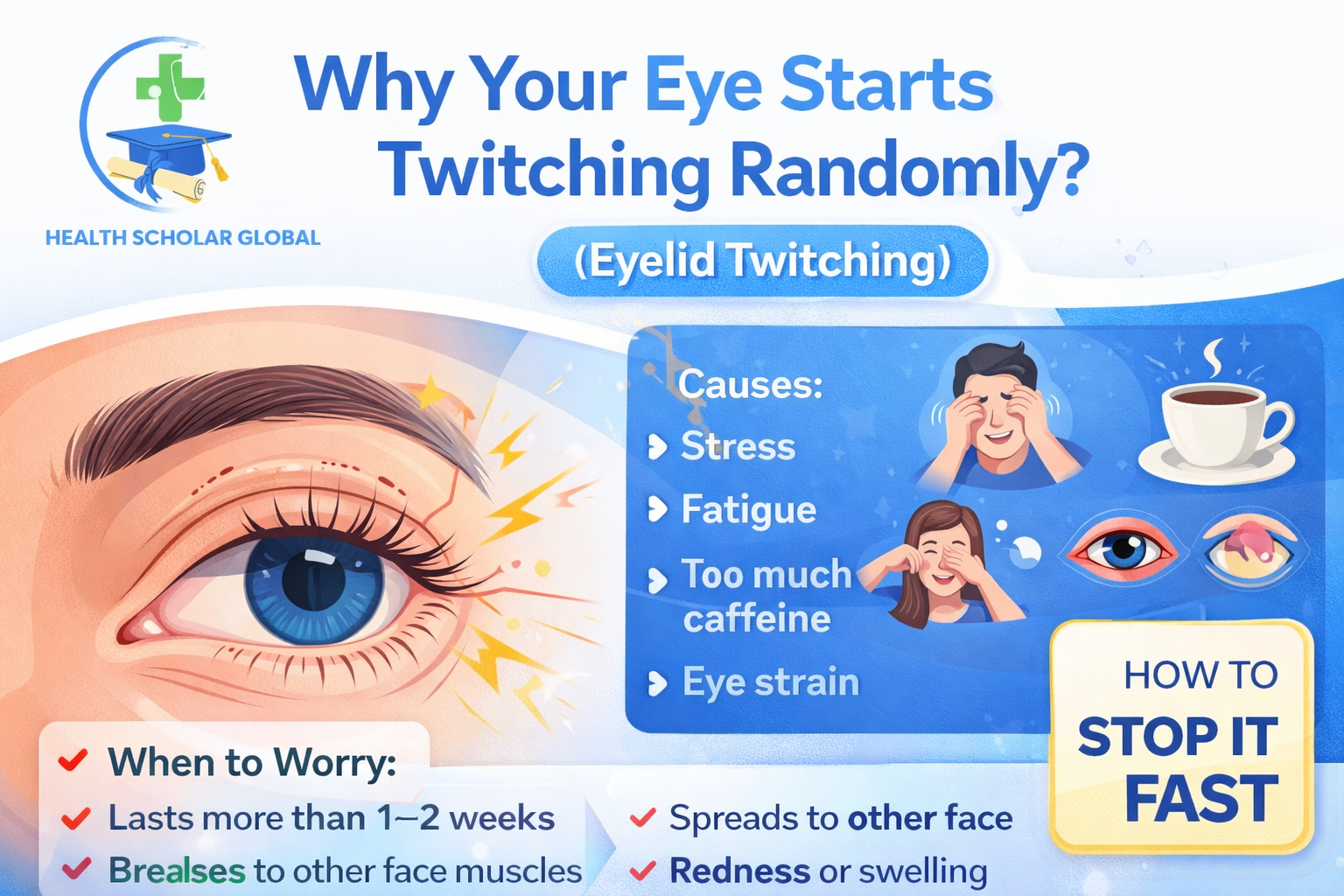
What Is Eye Twitching?
Eye twitching, medically known as eyelid myokymia, is a common, usually harmless condition where small muscles in your eyelid contract involuntarily.
It often feels like a subtle, repetitive flutter or spasm—typically affecting the upper eyelid.
What Causes Eye Twitching?
Eye twitching is usually triggered by temporary lifestyle or neurological factors.
The most common causes:
- Stress and anxiety
- Fatigue or lack of sleep
- Excess caffeine intake
- Eye strain (especially from screens)
- Dry eyes or irritation
These factors increase the excitability of the nerves controlling your eyelid muscles, leading to spontaneous contractions.
What’s Happening in Your Body?
Eye twitching occurs due to minor disruptions in nerve signaling.
The mechanism:
- Nerves controlling eyelid muscles become overstimulated
- Muscle fibers contract involuntarily
- Repeated firing causes visible twitching
This is usually benign and self-limiting.
Why Does Eye Twitching Happen Randomly?
It may seem random, but there is often an underlying trigger.
Hidden contributors:
- Accumulated stress over time
- Poor sleep quality
- Prolonged screen exposure without breaks
- Nutritional imbalances (e.g., magnesium deficiency)
Your body is essentially signaling fatigue or overstimulation.
How to Stop Eye Twitching Quickly
Most cases resolve on their own, but you can speed up recovery.
Effective solutions:
- Get adequate sleep (7–9 hours)
- Reduce caffeine intake
- Take breaks from screens (20-20-20 rule)
- Stay hydrated
- Manage stress (deep breathing, relaxation techniques)
When Should You Be Concerned?
Although eye twitching is usually harmless, certain signs require medical attention.
See a doctor if:
- Twitching lasts more than 1–2 weeks
- It spreads to other parts of your face
- Your eye closes completely during spasms
- You have redness, swelling, or discharge
These may indicate conditions like:
- Blepharospasm
- Hemifacial spasm
- Neurological disorders (rare)
How to Prevent Eye Twitching
Prevention focuses on maintaining nerve and muscle balance.
Practical tips:
- Maintain a consistent sleep schedule
- Limit caffeine and alcohol
- Use artificial tears if you have dry eyes
- Adjust screen brightness and posture
- Reduce stress levels
What Eye Twitching Reveals About Your Health
Eye twitching is often your body’s early warning system.
It can indicate:
- Physical fatigue
- Mental stress
- Sensory overload (especially digital exposure)
Rather than ignoring it, it’s best to see it as a signal to slow down and reset.
Related: Test your knowledge and attempt our Quiz on Eye Twitch here
Frequently Asked Questions (FAQ)
Why does my eye twitch randomly?
Eye twitching is usually caused by stress, fatigue, caffeine, or eye strain affecting nerve signals in the eyelid.
How long does eye twitching last?
It can last from a few seconds to several days, but usually resolves on its own.
How do I stop eye twitching fast?
Get rest, reduce caffeine, and take breaks from screens.
Is eye twitching serious?
Most cases are harmless, but persistent or spreading twitching should be evaluated.
Can stress cause eye twitching?
Yes, stress is one of the most common triggers.
Test your knowledge and attempt our Quiz on Eye Twitch here
Sources
- American Academy of Ophthalmology. Eye Twitching (Myokymia)
- Mayo Clinic. Eye Twitching Causes and Treatment
- National Institutes of Health (NIH). Neuromuscular Activity Studies
- Cleveland Clinic. Eyelid Twitching Overview
- NHS (UK). Eye Twitching (Eyelid Myokymia)

Pingback: hello world
Pingback: ketoconazole shampoo guide
Pingback: terbinafine side effects details
Pingback: ivermectin demodex clinical background
Pingback: ivermectin rosacea topical therapy
Pingback: minoxidil 2% vs 5% full review
Jasmine804
July 2, 2026 at 8:20 amhttps://shorturl.fm/R8C4D
Curtis660
July 2, 2026 at 11:15 pmhttps://shorturl.fm/4EJ0X
Linda4505
July 3, 2026 at 5:49 pmhttps://shorturl.fm/cZ6M1
Gabriela3205
July 3, 2026 at 11:33 pmhttps://shorturl.fm/LeghN
Hudson2527
July 5, 2026 at 4:17 amhttps://shorturl.fm/Ic15o
Bennett120
July 5, 2026 at 10:33 pmhttps://shorturl.fm/slz1X
Marie4490
July 6, 2026 at 4:50 amhttps://shorturl.fm/1RaKg