

 admin
admin Paresthesia explained: discover why you get pins and needles, what causes it, when it’s harmless, and when it could signal a serious medical condition.
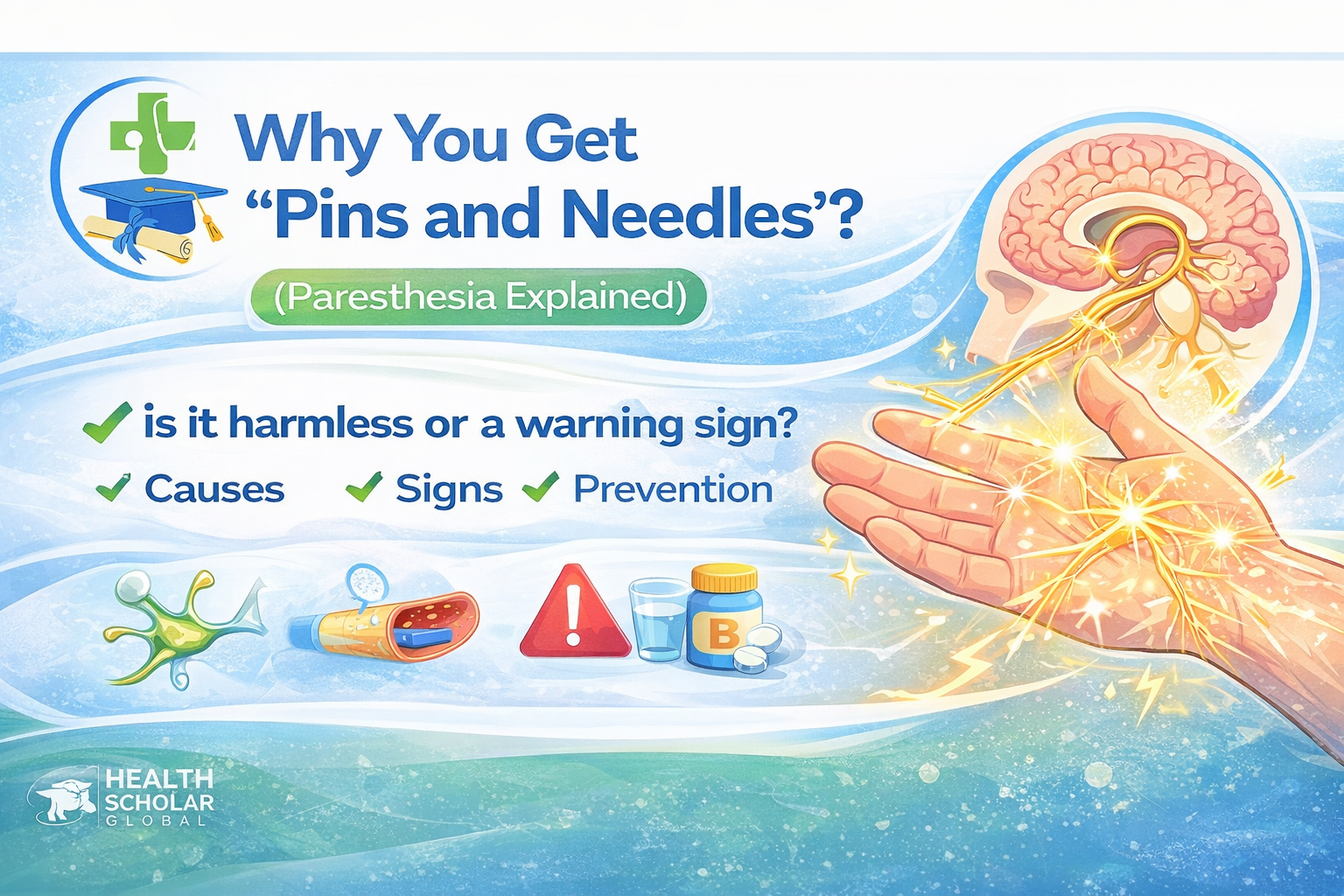
Why You Get “Pins and Needles” (Paresthesia Explained)
That familiar tingling sensation often described as “pins and needles” is medically known as paresthesia—a common neurological experience that most people encounter at some point in their lives. It typically occurs suddenly, without warning, and can affect various parts of the body, especially the hands, feet, arms, and legs.
In most cases, this sensation is temporary and harmless. However, understanding why it happens reveals important insights into how your nervous system and blood circulation work together to maintain normal sensation.
What Causes the “Pins and Needles” Feeling?
The primary cause of paresthesia is pressure on a nerve or reduced blood flow to that nerve. When you sit or lie in an awkward position—such as crossing your legs for too long—you compress both the nerve and the small blood vessels supplying it.
This interruption disrupts the normal transmission of signals between the nerve and the brain. As a result, the affected area may “fall asleep,” a phenomenon medically referred to as obdormition.
When the pressure is relieved and blood flow returns, the nerve becomes active again. During this recovery phase, the nerve sends irregular or rapid signals, which the brain interprets as tingling, prickling, or buzzing sensations—what we call pins and needles.
The Science Behind the Sensation
At a physiological level, paresthesia occurs because nerves require a constant supply of oxygen and nutrients to function properly. When compressed, this supply is temporarily reduced, impairing nerve signaling.
Once normal circulation resumes, the nerve fibers become temporarily hyperactive as they “reset.” This heightened activity produces abnormal sensory signals, leading to the characteristic tingling sensation.
This process highlights a key principle of neurobiology:
Nerves are highly sensitive to even brief disruptions in blood flow and pressure.
Temporary vs. Chronic Paresthesia
Paresthesia can be classified into two major types:
1. Transient (Temporary) Paresthesia
This is the most common form and usually occurs due to:
- Sitting or sleeping in one position for too long
- Leaning on a limb
- Minor nerve compression
It resolves quickly once normal circulation returns.
2. Persistent (Chronic) Paresthesia
When the sensation lasts longer or occurs frequently, it may indicate an underlying medical condition such as:
- Nerve damage (neuropathy)
- Diabetes
- Carpal tunnel syndrome
- Circulatory disorders
- Vitamin deficiencies
- Neurological diseases like multiple sclerosis
Unlike temporary paresthesia, persistent symptoms require medical evaluation.
Common Everyday Triggers
Although it may feel random, pins and needles often have identifiable triggers. These include:
- Poor posture or prolonged immobility
- Dehydration
- Hyperventilation
- Stress or panic attacks
- Minor injuries (e.g., hitting the “funny bone”)
Even simple habits, such as sleeping on your arm, can compress nerves enough to trigger the sensation.
Related: Try our Quiz on Paraesthesia (Pins & Needles) here
When Should You Be Concerned?
While most cases are harmless, certain patterns of paresthesia should not be ignored.
You should seek medical attention if:
- The sensation persists or occurs frequently
- It is accompanied by weakness, pain, or loss of coordination
- It spreads or worsens over time
- It occurs without any obvious cause
Persistent paresthesia can sometimes indicate nerve damage, poor circulation, or underlying neurological conditions.
What “Pins and Needles” Reveals About Your Body
Paresthesia is more than just an uncomfortable sensation—it is a protective signal from your body.
It indicates that:
- A nerve is under stress or compression
- Blood flow has been temporarily disrupted
- The nervous system is reacting to environmental or positional changes
In this sense, pins and needles act as an early warning system, prompting you to move, adjust, and restore normal function before damage occurs.
How to Prevent It
Preventing paresthesia is often simple and involves maintaining healthy nerve function and circulation:
- Avoid staying in one position for too long
- Maintain proper posture
- Stay hydrated
- Take regular movement breaks
- Ensure adequate vitamin intake (especially B vitamins)
These steps help keep both your nervous system and vascular system functioning optimally.
Conclusion
“Pins and needles” may seem like a trivial experience, but it reflects a complex interaction between nerves and blood flow. While temporary paresthesia is a normal physiological response, persistent or unexplained symptoms should never be ignored.
Understanding this common phenomenon not only improves awareness but also highlights the importance of listening to your body’s early signals—because even minor sensations can reveal deeper insights into your health.
Related: Try our Quiz on Paraesthesia (Pins & Needles) here
References
- Cleveland Clinic – Paresthesia Overview
- NHS – Pins and Needles Causes
- University of Rochester Medical Center – Cause of Paresthesia
- WebMD – Paresthesia Facts
- Patient.info – Pins and Needles Causes

Pingback: terbinafine mechanism antifungal summary
Pingback: toradol drug profile
Pingback: minoxidil men’s frontal hairline guide
Pingback: minoxidil women’s long‑term results
Angelo526
July 5, 2026 at 2:57 pmhttps://shorturl.fm/pjWAa